Writing and Religion

A few weeks ago, I reviewed Samantha Ryan Chandler’s A Love Story: How God Pursued Me and Found Me, an Impossibly True Story. Later this summer I also plan to read and review Anne Rice’s Memnoch the Devil. For that reason, I think it’s time for me to broach a controversial subject: writing and religion.

Before I start, I should cover a couple matters. The first is a reminder to all my readers to conduct themselves civilly and maturely in the comments. I have not experienced any problems yet but I know that we are treading on uneasy ground with this topic, so I want people to remember that we encourage conversation and debate as long as everyone remains respectful.

Secondly, I want to provide a brief overview of my religious background and beliefs. I feel I should give you an idea about my beliefs so that you’ll understand where I’m coming from with this post. I’ll try not to ramble so bear with me:

My mother is non-religious but had many religious Southern relatives, so she has some knowledge of the Christian religion. As a child I had a children’s Bible, and Joseph’s story was my favorite in it. I knew it as “Joseph and the Technicolor Dream Coat”.
Image retrieved from this website
I grew up in a non-religious household within a county dominated by Christians. My parents wanted me to be open-minded, at least my mother did, and so I have learned about as many religions as I can since I was a child. I attended religious release at a local Christian church in elementary school. I have also studied the Bible as literature and I find parts of it interesting. I have also read about other religions such as Judaism, Islam, Hinduism and other polytheistic religions, etc. Through self-reflection and deep thought, I decided, as my parents did, that Christianity does not encompass my beliefs, nor does any other religion.

I call myself “agnostic” because my beliefs do not fully fall under any established religion. There’s no accurate term for my beliefs. The best way to describe me would be to call me “spiritual” rather than “religious.” I believe that there is something greater than us which has a plan for everyone, even if we do not understand what that plan is. I call this thing the “universe” but I’m not sure what exactly it is. I also believe that other deities exist within the universe, deities generated by our individual beliefs, and they are real for those whom believe in them. I think every religion has its good and bad points, its values and hypocrisies, and so they are all simultaneously right and wrong.

I could write an entire book on my beliefs and maybe I will someday. For now, I’m going to continue with the original point of this post, writing and religion.

If you look at the ALA’s most frequently challenged books lists, you’ll see that many books have been challenged for “religious viewpoint.” This reason has been used for everything from the Bible to Twilight.

It’s so common to challenge a book on this basis because everything ever written is going to violate/offend at least one person’s religious beliefs. Honestly, it’s unavoidable. Not everyone believes the exact same thing so odds are you’ll offend someone if even a shred of your beliefs leak into your writing.

With that in mind, should we as writers try and avoid including our beliefs in our work? Should we separate writing and religion?

My answer, as I often say with questions of censorship, is no.

Religion is a part of the human experience. For thousands of years it’s helped us navigate the world, first to explain natural phenomenon and then to answer philosophical questions such as why we’re here. We may now be able to hear the voices of more religions–and those with no religion at all–but that doesn’t mean religion overall will leave any time soon. We’ll never have a definitive answer to everything and so humans will continue to use religion to make sense of the chaos.

Does that mean it should appear in writing?

Writing and religion are as intertwined as writing and politics. Religion makes writing interesting. Writing conveys and critiques religion. Hints of the writers’ religious beliefs, or at least religious beliefs which have held any influence on them, appear in poetry, non-fiction, and fiction. Even fantasy can be heavily influenced by the writer’s beliefs. (Just read some analyses of C.S. Lewis’s The Chronicles of Narnia.)

Rick Riordan’s children books is based on Greek and other mythologies but, as far as I know, he is not polytheistic.
Image retrieved from the Percy Jackson wiki
I don’t think writers could remove everything that might be interpreted as religious influence even if we tried. Frankly, we slip in religious references without realizing it. I’m not Christian but it’s one of the religions I’ve encountered most, so it’s no surprise that once in a while I make subconscious symbolism based on the Holy Trinity or the Four Horsemen of the Apocalypse. I also draw heavily from polytheistic religions in my writing, especially fantasy pieces.

We can’t control what people see in our work. There’s an argument for Christian influence on Harry Potter, influences which could also easily be interpreted as coming from older mythologies and beliefs that predate Christianity. (The power of three is such an influence.) We may not intend to use certain religious references in a story but a reader may see them anyway. After all, it doesn’t matter what we mean to say so much as what people actually take from our writing.

I don’t think we should use writing to force our beliefs on others. There’s a difference between conveying/critiquing religion and violating another person’s right to their beliefs by shoving yours down their throats. That’s one reason I like Chandler’s book. It delivers the word of God without trying to force conversion, using scripture to raise people up rather than tear them down and make them feel miserable for existing.

Writers don’t need to exclude religion from writing. In fact, we shouldn’t. Religion, like politics, can add tension, obstacles for our characters, and deeper levels of meaning. However, it doesn’t mean that we have free license to violate other people’s rights. Freedom of expression and freedom of religion are important, so long as we do not harm others in the process.


Designed by Stephanie Hoogstad circa 2011

The Writer Contest: Let There Be Light

Happy Friday! The weekend is almost here; I can see the light at the end of the tunnel. Speaking of “light,” I have an interesting contest to tell you about that also serves as a writing prompt. It’s a contest presented by The Writer magazine called “Let There Be Light.”

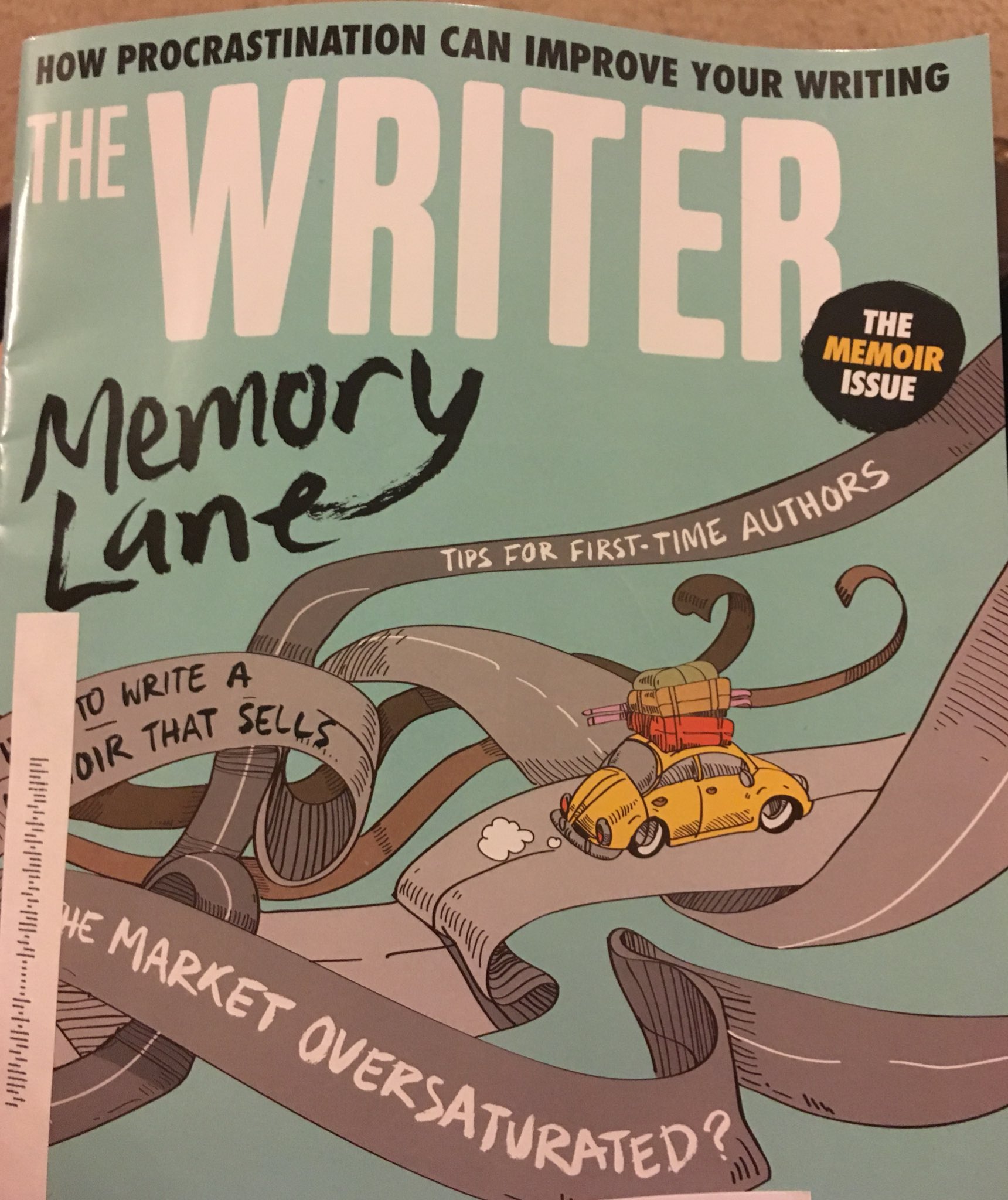
I first learned about the contest from an ad in the August 2017 edition of the magazine. Information about the contest is also available on their website.

For now, here’s the basic rundown:

  • The short story you enter must be based on this prompt
    • “Write a 2,000-word fictional short story using any nuance, definition, or understanding of the word ‘light’.”
    • Some examples from the magazine include “I saw the light,” “Lighten the load,” and “Give the green light.”
  • Stories must be 2,000 words or less.
  • Entry fee: $25
  • Deadline is midnight Eastern Standard Time on August 21st, 2017.
  • Entries are only accepted through their entry form (see the link provided above).
  • First place prize: $1,000 and publication in The Writer
  • Second place prize: $500 and publication on their website
  • Third place prize: $250 and publication on their website
  • International (non-US) writers are allowed to enter.

The prompt sounds easy enough, right? Open-ended and leaves room for creativity?

Just be careful not to trick yourself into thinking it’s too easy. Writers are notorious procrastinators. While some of us thrive under pressure, not leaving ourselves enough time because we think something will be easy can kill our writing.

You should also remember that the most open-ended prompts are often the hardest. Without strict parameters, the imagination may try and wander down several different paths, leading to a story which is scatter-brained, incoherent, poorly-executed, and incomplete.

Don’t be deterred, though. Any one of you could submit a story and win. I’m looking forward to seeing a familiar name printed in The Writer.

Good luck to all who enter.


Designed by Stephanie Hoogstad circa 2011

Book Reviews: Summer of Magic Anthology

Today I’m returning to familiar territory for my review: fantasy. However, I’m travelling down an avenue with which I haven’t had much experience, i.e. urban fantasy. I’m no stranger to fantasy which incorporates technology and other modern elements, namely Eoin Colfer’s Artemis Fowl and Rick Riordan’s Percy Jackson and the Olympians, but Summer of Magic is arguably for more mature audiences.

An author of the anthology gave me an advanced reader copy of Summer of Magic in exchange for my honest review, and I’m happy she did. My imagination had departed from fantasy for far too long, and this collection helped bring it back.

Summer of Magic comprises seven short stories: “Uprising” by Andrew Dobell, “The First Imprint” by Lee Hayton, “Gypsy’s Ghost” by Andrea Drew, “Monster” by Art DeForest, “How to Fuel Your Revenge” by Nicole Zoltack, “Born of Ashes” by Jamie Davis, and “Goblin’s Amends” by Wren Cavanagh. From a secret society of magic-wielders in London to magical creatures working at a hospital, the anthology represents the entire gamut of possibilities offered by urban fantasy today.

Magic, action, and everyday social interactions play prominent roles but the humor became my favorite part of the collection.


Are you, like, a…Death Eater? –Andrew Dobell, “Uprising”

Zeus sniffed at the corpse, snarling slightly, and then raised a hind leg in a timeless salute. –Art DeForest, “Monster”

I have to admit that I take a special guilty pleasure in crossing off every one of those Cowboys-fan vampires. What can I say? I’m a Washington Redskins fan. –Nicole Zoltack, “How to Fuel Your Revenge”

I saw how you were looking at him, hey whatever rings your bell…panties damp yet? –Wren Cavanagh, “Goblin’s Amends”


This humor keeps the stories engaging, grounds them in today’s (first-world) society, and enhances the writers’ individual voices. It doesn’t hurt that any references to Harry Potter make me chuckle.

The anthology could do with some workshopping but it’s definitely worth a read for all urban fantasy fans.

Image retrieved from Amazon (link below)

The worlds depicted in Summer of Magic boast imaginative energy. While the stories take place in our world, the writers weave fantastical elements into the ordinary, sometimes in new ways and sometimes in manners more familiar to the reader. Whether it’s new magic like the coven in “Uprising” or retellings of old creatures like “Born of Ashes,” the treatments of these subjects capture the imagination and make you want more.

“Goblin’s Amends” brings a fascinating twist on mythical/legendary creatures. The story throws readers right into the magic with the unusual theft of a gold necklace. Next thing the reader knows, an injured harpy visits the ER and surprises all onlookers except for Dr. Sidra Luna and Nurse Cara Garay. As the narrative progresses, Cavanagh exposes more and more characters for the magical creatures they are. I started looking for the next to join their ranks—trust me, you’ll be guessing until the very end.

I would love to see Cavanagh continue developing this world and the interactions among its inhabitants further. From adoption to magical creature support groups and sociopolitical commentary, she hints at a much larger, complex universe in which any fantasy fan will easily get lost.

Unfortunately, that world-building also serves as the anthology’s downfall. For many of the stories, too much is attempted in a short amount of space. “Uprising” in particular has an issue with ambitious world-building leading to extraneous exposition and the sacrifice of good pacing.

“Uprising,” which takes place in modern-day London, follows a semi-celebrity magic-wielder, the coven she encounters, and the attacks launched against them by a group of murderous Nomads. This story, although rather lengthy, is merely a slice of the world which Dobell creates in The Magi Saga. At first, “Uprising” maintains a quick pace which matches the danger the characters face. The world and people who populate it kept my attention fairly well, especially the fan-boying coven member Richard, but the progression disappointed me. The plot is strong but between the exposition regarding characters’ backgrounds and the lack of suspense during later action scenes, I felt incomplete. In a way, I want to read more of The Magi Saga just to gain a more fulfilling view of Dobell’s world.

Other stories in the anthology have similar problems. “How to Fuel Your Revenge,” a heart-racing narrative about a vampire hunter, ends on a cliché. “Monster” only partially resolves the enthralling narrative of cunning, nature, and the struggle of man vs. werewolf. “Goblin’s Amends,” which reminds me of Gabriel García Márquez’s surreal “A Very Old Man with Enormous Wings,” disappointingly rushes through the final action scene. “Gypsy’s Ghost,” which I was excited about because Gypsy is a freelance copywriter/medium, also wraps things up too quickly.

That’s not to say that I didn’t enjoy these stories. Rather, I know these stories have a lot to offer and I don’t know if they’ve reached their full potential yet.

There are two stories with which I had few problems, “Born of Ashes” and “The First Imprint.”

“Born of Ashes” depicts two paramedics’ efforts to rescue and treat Unusuals—i.e. magical creatures—from a horrible car crash. It comes as part of Davis’s Extreme Medical Services series, and, as with the other stories, the author occasionally overuses exposition to help readers understand the world. Nevertheless, “Born of Ashes” stands as a gripping story on its own while also baiting the reader to check out the rest of the series.

“The First Imprint,” on the other hand, is a fully-fledged, self-sustained narrative. It takes readers on Bretta’s first solo job reading an “imprint,” which we would call a ghost or residual energy. While the plot is simple and straightforward, the emotional struggle it explores is not. The social dynamics among Bretta, her father, the widow, and the widow’s husband grabbed hold of me from page one and refused to let go. The ending left me very satisfied while also leaving open the possibility of more stories should Hayton choose to pursue this world.

Some Amazon reviews mention typos. However, these errors have since been corrected and, in all honesty, they didn’t detract from the storytelling in the first place.

The collection is worth a read for fans of urban fantasy. If nothing else, the variety of worlds shown will help budding writers learn what they do and do not want to explore when tying together magic, 21st-century technology, and modern sociopolitical struggles.

I look forward to reading more from these writers, and I plan to continue with the series represented in Summer of Magic.

To learn more about this and other books or contact Notch Publishing, you can follow this link. If you would like to read Summer of Magic and access its worlds for yourself, please click on the ad below.

What do you think of this anthology? Praise? Ideas for improvement? Have any suggestions for books I should review next? Feel free to leave your thoughts in the comments.


Designed by Stephanie Hoogstad circa 2011

The Importance of Naming Characters

What’s in a name? In literature, a lot. Naming characters involves layers upon layers of consideration: time period, ethnicity, race, religion, geographic location, personality, themes, hidden meanings, the character’s role in the story, etc. You must research name meanings, origins, and sometimes how people react to certain names. You even have to consider how the name sounds. That’s a lot of work for something that seems so trivial, right?

Yes and no.

We walk through our everyday lives, meeting new people and learning their names, without ever thinking about all the thought that their parents/guardians put into naming them. Nevertheless, people usually name their children with purpose.

That barista at Starbucks named Angela? Her parents were told that they couldn’t have kids and she was their miracle child, their angel. Your coworker Hugo? His mother loved the works of Victor Hugo and he was named after the author; he grew up to have a love for Hugo’s novels and secretly wants to be a writer himself. That boy in your son’s class who only goes by Junior? The paternal side of his family has a long tradition of sons named after their fathers with the sons called “Junior” and the fathers referred to as “Big Al.”

The same is true in literature. When I reviewed Anna James Watson’s Blackmail, I pointed out that “Tristan” and “Julian” both have roots in romantic literature. People best know “Tristan” for the Arthurian romance Tristan & Isolde, and “Julian” shares a root with one of the most famous female leads in tragic romance, Juliet.

Writers can use names to direct people’s views of a character or reveal a deeper meaning behind a narrative. J.K. Rowling is rather infamous for all the thought and creativity she puts into naming her characters.

Image retrieved from Pinterest

At the same time, though, you have to be careful. Sometimes attempting to add meaning while naming characters can have unrealistic, and often bitterly humorous, results. No Potterhead will ever overcome the urge to laugh at “Scorpius Malfoy” and “Albus Severus Potter.” Watson’s Tristan has a surname that I can’t get over: “Masters.” Considering he’s a rich boy with a need to feel in charge at all times, it’s too on-the-nose for my taste.

You also have to remember that sometimes people have the names they have for no special reason, and the same can be true for naming characters as well.

I recently named a character “Angie.” I didn’t put any real thought into it, it just popped onto the page as I was typing. Then, for whatever reason, I couldn’t get myself to think of a more “meaningful” name. Something inside me said that it was just this character’s name, that’s it. And you know what? Sometimes naming characters happens that way.

Some character names are best when they have a special meaning, some are best when they don’t, and often you have to straddle the line, giving the names meaning without going overboard. The process can be quite the headache but, if handled correctly, it will raise your writing to the next level.

Writing is a very personal endeavor, changing from writer to writer and from story to story, so I would like to know other writers’ opinions on this matter. Please share your thoughts on and experience with naming characters in the comments below.


Designed by Stephanie Hoogstad circa 2011

Dealing with Writer Envy

Happy Monday. Today I’m going to talk about dealing with writer envy, an issue I’ve struggled with time and time again.

The other day I received the August 2017 edition of The Writer. In it is an article by Ryan G. Van Cleave titled “Little Green Monsters: The 411 on Writer Envy”. Van Cleave gives a brief overview of his own experiences with envy, provides advice from four professional writers, and finishes with his own advice on “defeating the little green monster.” I suggest grabbing a copy and reading the entire article.

So, what is writer envy? It’s when we, as writers, see others succeed and feel bad because those other writers seem to be accomplishing more than we are.

It’s a dog-eat-dog world, just ask these two.

Image retrieved from SlayMyBoredom

If you were to tell me that, throughout your entire writing career, you’ve never felt writer envy, I’d likely huff at you. Even the most selfless, altruistic human is susceptible to greed and jealousy. And let’s face it, all markets–including the writing market–encourage competition which, in turn, cultivates a needless “dog-eat-dog world” mentality.

I know I’ve had this issue. It doesn’t make me mad at the other person and I don’t blame them for it. Rather, I start to wonder why I’m not successful like they are and if I’m not good enough to be a writer. I’ve gotten somewhat better about not having this reaction lately. However, I still have moments when I see that a writing friend has won a contest or been published and I feel a twinge and question my ability to succeed.

How do you stop this self-destructive attitude? Well, there’s no way to entirely eliminate it. Nevertheless, you can curb it, either by turning it into something productive or adjusting your thinking to have more positive reactions.

Van Cleave has his own advice for handling writer envy, which I think every writer should read. Here, though, I’m going to discuss my own ways of dealing with it:

  1. Raise the bar for yourself. Instead of whining and moaning “why didn’t it happen to me”, make and meet your own goals. Do you have an edited manuscript in your drawer gathering dust? Start querying agents! Learned of a contest you want to enter? Get on it! Jealousy, to a certain point, can be a good motivator; you just have to make yourself use that motivation. You can’t expect an agent to randomly e-mail you saying “You didn’t query me but I’d love to represent your book.” (If you do, that’s a huge red flag for a scam.) The only way things are going to change is if you push yourself harder and do the work.
  2. Channel the envy energy into something productive. Whether it’s writing-related or an expenditure of energy in another area of your life, I’m sure you can find some good use for the pent-up aggression and agitation. Write a new story. Edit your manuscript. Query a magazine or blog. Heck, you could even clean your house and it would still be a better use of this energy than stewing on someone “doing better” than you.
  3. Remind yourself of your accomplishments. Van Cleave hints at this coping mechanism by suggesting that, if you feel the need to compare yourself to someone, you should compare your work now to your old work. I’m not going to lie, depending on the mood you’re in that may not be the best idea. I’ve depressed and embarrassed myself enough to know that you have to choose the right time to revisit old writing. You should, however, remind yourself of how much you have achieved. Won a contest a few years back? Had an article or short story published in a magazine? Finished a book-length manuscript during the last NaNoWriMo? All of those are great feats to achieve. You need to remind yourself of that and remember that you’re not in competition with anyone but yourself.
  4. Think of another writer’s success as a sign that you can succeed. If you’re suffering from writer envy, you’re probably already thinking “I’m just as good and/or as experienced as they are, why haven’t I caught a break”. Flip that mindset. Instead of complaining that you haven’t gotten a break when you’re like this other writer, think about the fact that another writer like you has succeeded. Since they’ve succeeded, that means someone like you has the potential to make it in the writing market. In other words, this other writer’s success means that you can succeed, too, if you put in the effort.
  5. Also remember to subscribe to The Writer for more great advice, news, and writing prompts.

    Remember that everyone grows at their own pace. Just because you seem to be “falling behind” doesn’t mean that you actually are. You remember in high school when you complained because you weren’t tall enough, weren’t strong enough, weren’t maturing quickly enough, whatever, and then your parents (or other trusted adult) told you not to worry about it because everyone grows at a different rate? The same is true for everything else in life, including writing. Progress is not the same from person to person. Everyone has to work and live at their own pace. As I said in #2, stop comparing yourself to everyone else. All that matters is that you’ve grown in comparison to your old self. Any other comparison will only depress you and/or drive you crazy.


I know this is all easier said than done. We’re taught from an early age that we have to be competitive or we won’t survive. It’ll take a lot of unlearning and conscious reconstruction of your thoughts to help you overcome the hurdle of writer envy. Don’t give up. You’ll feel a lot better about yourself when you get past it and you’ll be able to enjoy your fellow writers’ success, perhaps even helping them along the way.

Any thoughts on writer envy or how to get over it? Suggestions for future topics? Drop a line in the comments or e-mail me at thewritersscrapbin@gmail.com.

And don’t forget to sign up for e-mail notifications and my newsletter, both of which you can find in the menu below the blog statistics.


Designed by Stephanie Hoogstad circa 2011